
In finance and trading, small details which influence profits are found quite difficult to understand by many beginners. The spread has been suggested as one of the most common and important concepts. It is the unseen expense of all trade, and understanding how it operates may save money and advise better judgment.
What to know about spread in trading
What is spread in forex trading
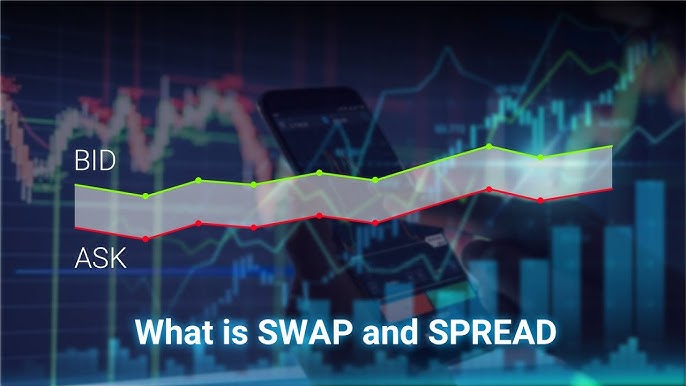
Spread is the disparity between the ask price and the bid price. In forex, that difference will symbolize the commission to the dealer to broker the trade.
- Bid price: this is the price that you are able to sell a pair of currencies.
- Ask price: this is the price at which you can purchase a currency pair.
- Spread: this is the tiny space in between them expressed in pips.
The less the dispersion, the less the trade cost. The broader spreads imply increased expenditure on both occasions when the market liquidity or volatility is low.
Understanding the basics of spread in trading
Before proceeding further, learn the major points describing how spread in trading is applied in practice:
- The spread is calculated in pips, which are small price fluctuations in forex.
- They are not determined; spreads may increase or decrease depending on the market conditions.
- The brokers can give fixed or variable spreads (which vary with the market).
- The spreads of major currency pairs tend to be lower than those of exotic pairs.
- Large volatility usually leads to the expansion of spreads, increasing the cost of trading.
Benefits of understanding spread
The spread of knowledge is not simply a theory. It provides traders with several tangible advantages:
- Better cost control – You know the amount you pay per trade.
- Smarter strategy- You can avoid trading with spreads that are too wide.
- Higher profit potential -Less expense leaves more in your pocket.
- Risk awareness- You can prepare for volatile periods where the spreads rise.
How spreads affect your trading
Spreads need not be huge, but they have a consequence on your results:
- Wide spread entails spreading the market further before you can even break.
- Scalpers and day traders are the most affected since they have a lot of trades.
- Swing traders are not as influenced, although they must pay close attention to the spread sizes.
- Trading around big news releases is usually accompanied by a high spread.
How to reduce trading costs caused by spreads
To ensure spreads does not eat your profits there are a number of practical steps to maintain:
- Sell or buy the key currency pairs such as EUR/USD or USD/JPY.
- It is advisable that you should not trade during low liquidity time like late evenings.
- Find out whether your broker is offering tight spreads and commissions.
- Comparison among various brokers to develop the most favorable spread structure.
- Trial on a dummy account to observe the real time behavior of spreads.
When do spreads widen
Spreads do not necessarily remain constant. Under certain conditions, they are enlarged:
- Major news events, such as interest rate decisions.
- Openings and closings of the market in case of liquidity shifts.
- Fluctuating economies that are a source of uncertainty in currencies.
- The less liquid exotic currency pairs.
- The knowledge of these times will save traders high expenses.
Quick checklist for spread management
- Always examine the spread before getting into a trade.
- Record a trading journal to record the costs of the spread over time.
- Use economic calendars to escape periods of high spread.
- Select brokers who reputable officials control.
- Have a combination of spread knowledge and risk management strategies.
Finally
The spread is among the most significant components of forex trading. They determine the actual cost of entry into and leaving the market. Traders succeeded in spending less money to buy, learn how to read and manipulate spreads and make a better financial decision.